Your mouth contains hundreds of types of bacteria. Many are a normal part of a healthy oral microbiome, while others may become more important when gum inflammation, cavities, persistent bad breath, or other oral health problems keep returning.
A salivary bacteria test gives your dentist another way to look at that environment. Using a simple saliva sample, laboratory testing can identify certain bacteria and other markers that may help your dental team better understand your oral health and personalize your care.
At 12 Oaks Integrative Dentistry in Austin, salivary testing is not used as a replacement for a dental exam, periodontal measurements, X-rays, or your medical history. Instead, it can add another layer of information when we are trying to understand why a problem may be occurring and what may help reduce your individual risk.
What Is a Salivary Bacteria Test?
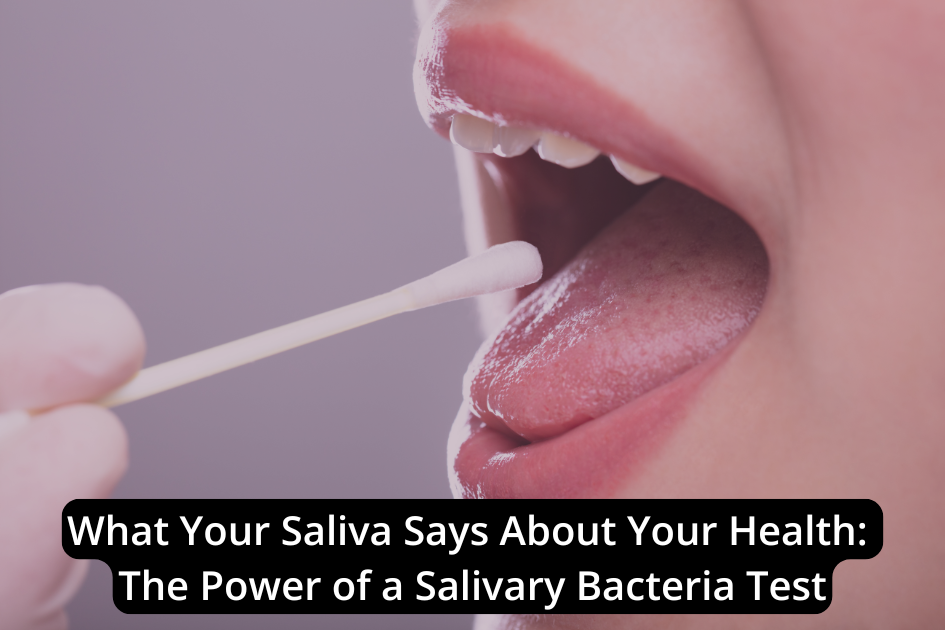
Salivary bacteria testing is a non-invasive laboratory test that analyzes a sample of your saliva or oral fluid.
Depending on the specific test being used, the laboratory may look for microbial DNA, bacterial levels, genetic information, inflammatory markers, or other components found in oral fluid.
This is different from simply looking for plaque during an exam.
A traditional dental examination tells us what we can see and measure clinically: inflammation, bleeding, periodontal pocket depths, decay, bone changes, recession, and other signs of disease.
A saliva test may provide additional information about the microbial environment associated with those findings.
That is why we use salivary testing as part of a broader evaluation rather than as a stand-alone diagnosis.
Learn more about how diagnostic testing fits into our approach to preventative and family dental care in Austin.
What Can a Dental Saliva Test Look For?
Different salivary testing panels look for different things, so there is no single universal “dental saliva test.”
For oral and periodontal health, testing may evaluate bacteria associated with gum inflammation and periodontal disease. Depending on the panel, these may include organisms such as:
- Porphyromonas gingivalis
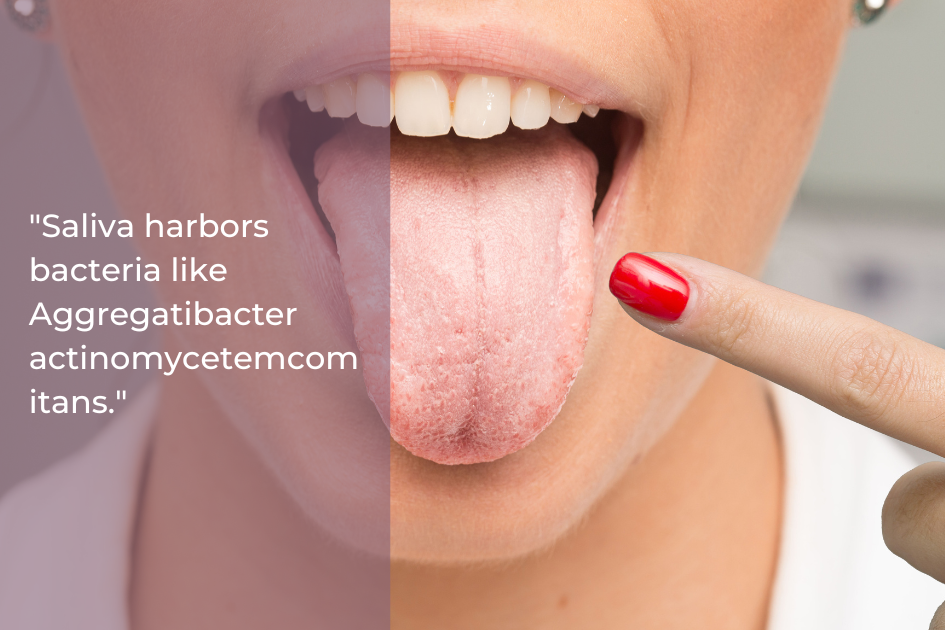
- Aggregatibacter actinomycetemcomitans
- Treponema denticola
- Fusobacterium nucleatum
- Prevotella intermedia
- Tannerella forsythia
The presence of one of these organisms does not automatically mean that you have gum disease or another health condition.
Everyone has an oral microbiome, and bacteria exist as part of a complex ecosystem. What matters is how the test results fit together with your symptoms, gum measurements, dental history, medical history, and clinical examination.
That context is important. Saliva contains microbial DNA and many other measurable biomarkers, but detecting a particular biomarker does not automatically establish a diagnosis.
Can Saliva Testing Help Evaluate Gum Disease?
This is one of the most useful applications of salivary bacteria testing in dentistry.
Periodontal disease develops through an interaction between bacteria, the body’s inflammatory response, oral hygiene, genetics, habits, and other health factors.
Two patients can have seemingly similar amounts of plaque but very different periodontal outcomes.
Salivary testing may help us better understand the bacterial part of that equation.
For someone experiencing recurring gum inflammation, bleeding, deep periodontal pockets, bone loss, or periodontal disease that does not seem to respond as expected, knowing more about the oral bacterial profile can provide additional information when planning care.
It does not replace periodontal measurements or a comprehensive examination. Instead, it gives us another piece of the puzzle.
If you are trying to understand the difference between early inflammation and more advanced periodontal disease, read our guide to the stages of gum disease.
Who Might Benefit From Salivary Bacteria Testing?
Not every dental patient needs a saliva test.
We are more likely to consider testing when the information may meaningfully affect how we understand or manage a patient’s oral health.
Salivary testing may be worth discussing if you have:
- Recurring gum inflammation or bleeding gums
- Periodontal disease that keeps returning
- A history of significant periodontal bone loss
- Dental implants with signs of inflammation around them
- Persistent bad breath that does not improve with normal oral hygiene
- Frequent cavities despite good brushing and flossing habits
- A family or personal history that suggests increased periodontal risk
- Oral health concerns that seem inconsistent with your home-care habits
- An interest in a more individualized preventive-care strategy
Testing can also be useful when we want to establish a baseline and monitor how the oral environment changes after treatment.
The decision is always individualized. Testing should answer a useful clinical question, not simply add another test to your appointment.
What Happens During a Saliva Test at the Dentist?
The collection itself is usually the easiest part.
At 12 Oaks, a saliva sample can be collected using a simple oral collection process and then prepared for laboratory analysis. The exact collection method depends on the test being ordered.
There are no needles, injections, or invasive procedures involved.
Once the laboratory processes the sample, we review the report alongside your dental examination and health history.
The important part is not simply receiving a list of bacteria. It is understanding what those findings mean in your specific situation.
Because collection requirements can vary by test, we will give you any preparation instructions you need before your appointment. You can also find information about diagnostic testing and visit preparation in our patient resources.
What Do Saliva Test Results Actually Mean?
A saliva report may identify particular microorganisms and, depending on the test, provide information about their relative amount or other measurable markers.
That information becomes most useful when we compare it with what we are seeing clinically.
If your gums bleed and periodontal measurements show inflammation, bacterial information may help us better characterize your periodontal risk.
If periodontal treatment has already been completed, repeat testing may sometimes be useful for evaluating changes in the oral environment.
If your dental health seems inconsistent with your home care, testing can provide additional clues about factors that may deserve attention.
The test does not replace clinical judgment.
It gives us additional data that can help make the conversation and treatment plan more personalized.
What Happens If Higher-Risk Oral Bacteria Are Found?
Finding certain bacteria does not automatically mean you need aggressive treatment or medication.
The next step depends on the entire picture.
Your care plan may include changes such as:
- Improving brushing, flossing, or interdental cleaning techniques
- More frequent professional cleanings or periodontal maintenance
- Treating active gingivitis or periodontal disease
- Addressing areas where plaque and bacteria are difficult to control
- Reviewing dry mouth and saliva flow
- Evaluating diet and other factors affecting the oral environment
- Reviewing existing dental restorations or implants
- Using specific home-care products when appropriate
- Retesting when the information would help assess progress
At 12 Oaks, we do not believe in treating a laboratory report instead of treating the person.
The goal is to combine the test results with what we know about your mouth, your history, your health, and your goals.
What Can a Saliva Test Not Tell You?
This may be the most important part of understanding salivary testing.
A dental saliva test is not a crystal ball.
It cannot, by itself:
- Diagnose periodontal disease without a clinical examination
- Tell us with certainty whether you will develop gum disease in the future
- Diagnose heart disease, diabetes, Alzheimer’s disease, or another systemic condition
- Replace dental X-rays or periodontal measurements
- Determine your entire state of health from one saliva sample
- Prove that a particular oral bacterium caused a health problem elsewhere in your body
Research into oral bacteria, inflammation, and systemic health continues to grow, and saliva is an exciting area of diagnostic research.
But good integrative dentistry requires us to distinguish between an association, a risk indicator, and a diagnosis.
We use salivary testing to help ask better questions and make more informed decisions, not to make promises that the science cannot support.
Why Saliva Itself Matters to Your Oral Health
Saliva does much more than keep your mouth wet.
Healthy saliva helps:
- Wash away food particles
- Buffer acids produced by oral bacteria
- Protect and remineralize enamel
- Lubricate oral tissues
- Support swallowing and digestion
- Help maintain a balanced oral environment
That is why dry mouth can have such a significant effect on dental health.
When saliva production decreases, the mouth loses part of its natural defense system. The risk of cavities, irritation, fungal infections, and other oral problems may increase.
If dry mouth is an issue for you, our article on the connection from dry mouth to tooth decay explains why saliva plays such an important protective role.
How Does Salivary Testing Fit Into Whole-Health Dentistry?
At 12 Oaks, our philosophy starts with a simple idea:
The mouth is part of the body.
We do not believe every dental problem has a systemic cause, and we do not believe every oral bacterium predicts a medical condition.
We do believe that looking at your health history, inflammation, habits, airway, saliva, bite, gums, and teeth together can sometimes reveal patterns that would be missed if we looked at a single tooth in isolation.
That is the purpose of salivary testing within our practice.
It gives us another source of information that may help us move from:
“You have inflammation.”
to:
“Let’s understand why this keeps happening and what we can realistically do about it.”
This same philosophy is at the center of our approach to Complete Health Dentistry and the mouth-body connection.
Salivary Bacteria Testing in Austin at 12 Oaks Integrative Dentistry
12 Oaks Integrative Dentistry uses advanced diagnostics when they can provide meaningful information about a patient’s health.
Our preventive care goes beyond simply checking for cavities. Depending on your needs, your evaluation may include periodontal screening, airway and jaw assessment, medical-history review, and salivary bacteria testing.
The goal is not to perform more tests.
The goal is to understand more.
If we recommend a saliva test, we will explain why we think it may be useful, what the test can tell us, its limitations, and how the results may influence your care.
That way, you are part of the decision rather than simply receiving a laboratory report.
Learn more about our approach to preventative care and salivary bacteria testing.
Frequently Asked Questions About Dental Saliva Testing
Is a saliva bacteria test painful?
No. Saliva collection is non-invasive and does not involve needles or surgery. Depending on the test, you may provide saliva or use an oral rinse or collection device.
Can a saliva test diagnose gum disease?
Not by itself. Gum disease is diagnosed through a clinical evaluation that may include periodontal measurements, examination of the gums, X-rays, and evaluation of bone levels. Saliva testing can provide additional information about oral bacteria or other markers that may help support treatment planning.
Can a saliva test identify the bacteria causing my gum problems?
Some tests can identify specific oral bacteria associated with periodontal disease. Those findings still need to be interpreted alongside your clinical examination because the presence of a bacterium alone does not establish that it is causing disease.
Is saliva testing only for people with gum disease?
No. Testing may sometimes be useful for preventive care, recurring cavities, implant-related inflammation, persistent oral health problems, or patients whose dental team wants additional information about their oral environment.
How long does it take to get saliva test results?
Turnaround time depends on the laboratory and the specific test ordered. Our team will let you know what to expect when your sample is collected.
Do I need to do anything before a salivary bacteria test?
Possibly. Preparation requirements vary by test and laboratory. We will provide the appropriate instructions before collection so the sample is as useful as possible.
How often should salivary testing be repeated?
There is no single schedule that applies to everyone. Repeat testing may be considered when the results would help evaluate changes after treatment or guide future care.
Should You Consider a Salivary Bacteria Test?
If you have recurring gum problems, unexpected dental disease, persistent inflammation, or simply want to understand your oral health at a deeper level, salivary testing may provide useful additional information.
The most important question is not simply:
“What bacteria are in my mouth?”
It is:
“What does this information mean for me, and will it change how we care for my health?”
That is the conversation we want to have with you.
If you would like to learn whether salivary bacteria testing makes sense for your situation, contact 12 Oaks Integrative Dentistry to schedule a comprehensive evaluation in Austin.