
Restore a cracked, weakened, heavily filled, or root-canal-treated tooth with a custom dental crown planned around your bite and long-term function.
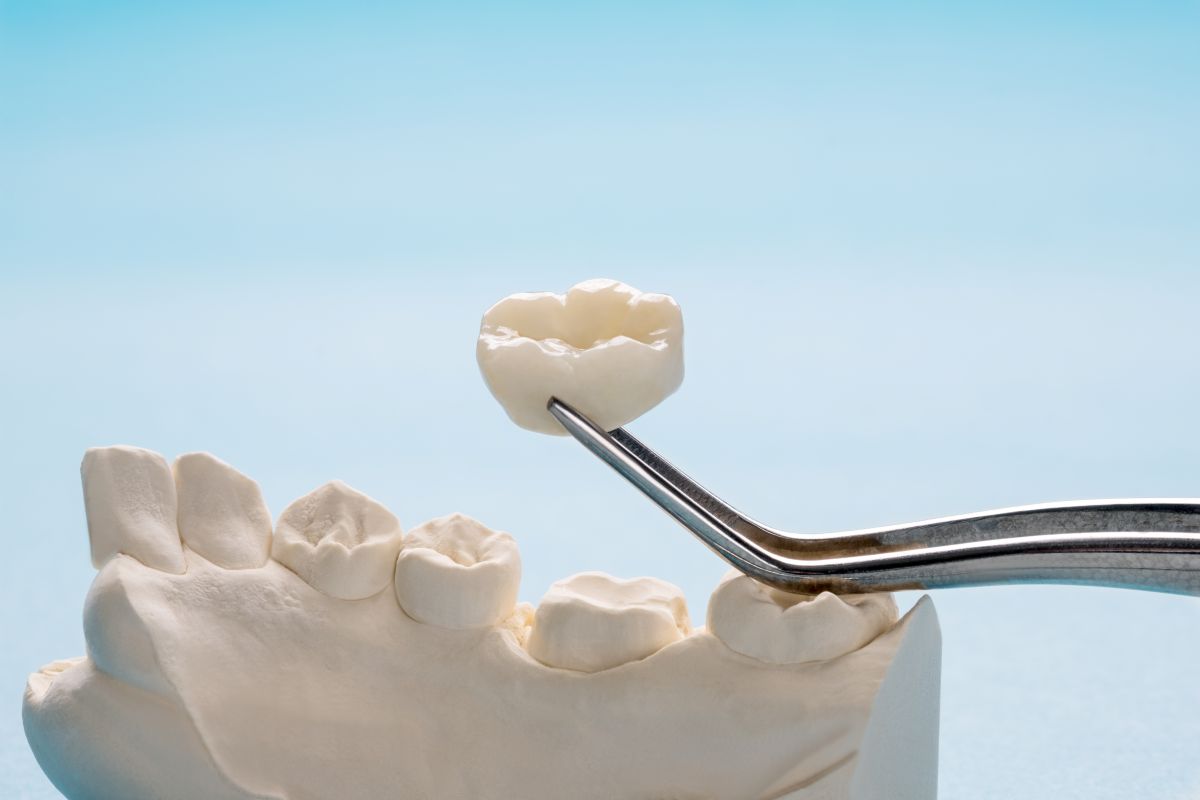
A porcelain crown is a custom-crafted, tooth-shaped cover placed over a damaged, weakened, or heavily decayed tooth. Crowns are used after root canals, on teeth with large fractures, and to anchor bridges.
Modern porcelain (and porcelain-fused-to-zirconia) crowns are strong, stain-resistant, and biocompatible — a significant upgrade from older metal-fused restorations.
At 12 Oaks, a crown is never just a cosmetic decision. We look at why the tooth needs one and what your bite is doing around it — because a crown placed on an unstable foundation is the next tooth likely to fail.
A crown that doesn't account for how your teeth actually come together will chip, crack, or wear unevenly. We evaluate your full bite mechanics — including grinding habits discussed in that really grinds my teeth — before we design a crown, not after it fails.

We recommend a crown only when it's genuinely the right, most conservative solution.
When too little structure remains to support a filling, a crown restores strength across the whole tooth.
Crowns hold a cracked tooth together, preventing the fracture from spreading.
Root-canal-treated teeth become more brittle over time. A crown protects them from fracture.
Teeth significantly worn from bruxism often need crowns, alongside addressing the grinding itself.
Crowns on teeth adjacent to a gap serve as anchors for a traditional bridge.
For severely discolored or damaged teeth, a crown restores both appearance and bite function.
A filling or inlay/onlay preserves more natural tooth than a full crown when the damage allows.
The right choice when enough of the tooth is compromised that it needs to be covered and reinforced entirely.
Most crowns are completed in two visits, spaced two to three weeks apart.
We assess the damaged tooth alongside your full bite mechanics.
The tooth is gently reshaped, and precise digital impressions are taken.
A temporary crown protects the tooth while your permanent crown is crafted.
Your permanent crown is bonded into place and carefully adjusted.
At 12 Oaks, before we design a crown, we ask what put this tooth at risk in the first place. Was it grinding? An unbalanced bite putting excess force on one side of your mouth? Untreated decay that could recur elsewhere?
We evaluate your full bite and jaw mechanics as part of every crown treatment plan. When grinding or bite misalignment is part of the picture, we'll talk through protective options, like a custom nightguard.
This is our Complete Health Dentistry approach in practice: treat the cause alongside the damage, so the restoration actually holds.
Schedule a Complete Health ConsultationTreatment fees vary from person to person because every case is different. Before treatment begins, we explain your options, review any applicable insurance benefits, and provide a clear, personalized estimate so you know what to expect.
11623 Angus Rd, Bldg D, Suite 16, Austin, TX 78759
Near the Arboretum and Domain. Serving Round Rock, Cedar Park, Pflugerville, Brushy Creek, Downtown Austin, Bee Cave, Lakeway, West Lake Hills, and Georgetown.